What It's Actually Like to Live in an Old Japanese House
By Minseon
People ask me all the time what living in an old Japanese house is really like. Not the romanticised version from magazines — the actual daily texture of it. Honestly, I wasn’t sure how to answer at first. Life in a Japanese traditional home doesn’t translate neatly into a list of pros and cons. It’s more like a relationship. And like any real relationship, it has taken time to understand.
The house speaks before you do
The first thing you notice is the sound. Every step on the old wooden floors announces itself — a low, settled creak that changes pitch depending on the weather. In summer, the boards swell slightly and the sound deepens. In winter, they tighten and become crisper underfoot. After a while, you stop thinking of it as noise and start hearing it as the house talking.
Then there’s the smell. Not unpleasant — far from it. Old timber, tatami, and the particular stillness of rooms that have held decades of seasons. It’s a grounded smell. Earthy in a way that modern materials simply aren’t. The first morning I woke up here, before I even opened my eyes, I knew I was somewhere with a past.
Space that breathes
Modern Tokyo apartments are efficient. Every square centimetre is justified, optimised, accounted for. Living here is the opposite of that. There are corridors with no obvious purpose. A small engawa — a narrow wooden veranda — that exists just to sit on, facing the garden. Rooms that overlap with the outside in a way that makes you lose track of where the house ends and the world begins.
In summer, you slide open the wooden panels and the house becomes porous. A breeze moves through rooms in a way that feels deliberate, almost architectural. In winter — and this is the part people don’t always mention — you feel that permeability in a less romantic way. Old Japanese houses are not well insulated. The cold finds you. There are drafts you learn to live with, layers you learn to wear inside, and spots near the kotatsu you learn to treasure. It’s humbling, honestly. Modern life has made us expect a building to hold the weather at bay. This house has a different arrangement with the weather. It co-exists with it.
Get the akiya cost breakdown we won't publish publicly
Join for renovation numbers, contractor lessons, sourcing notes, and behind-the-scenes updates from our Tokyo akiya.
Imperfections become familiar
Nothing here is quite straight. A wall that leans slightly. A doorframe that requires a familiar trick of the wrist. Tiles that have shifted over the years and now form a pattern that seems intentional even though it isn’t. In a new apartment, every imperfection is a complaint waiting to happen. Here, they become landmarks. Signs of time. You stop seeing them as flaws and start seeing them as character — the accumulated marks of everyone who lived here before you.
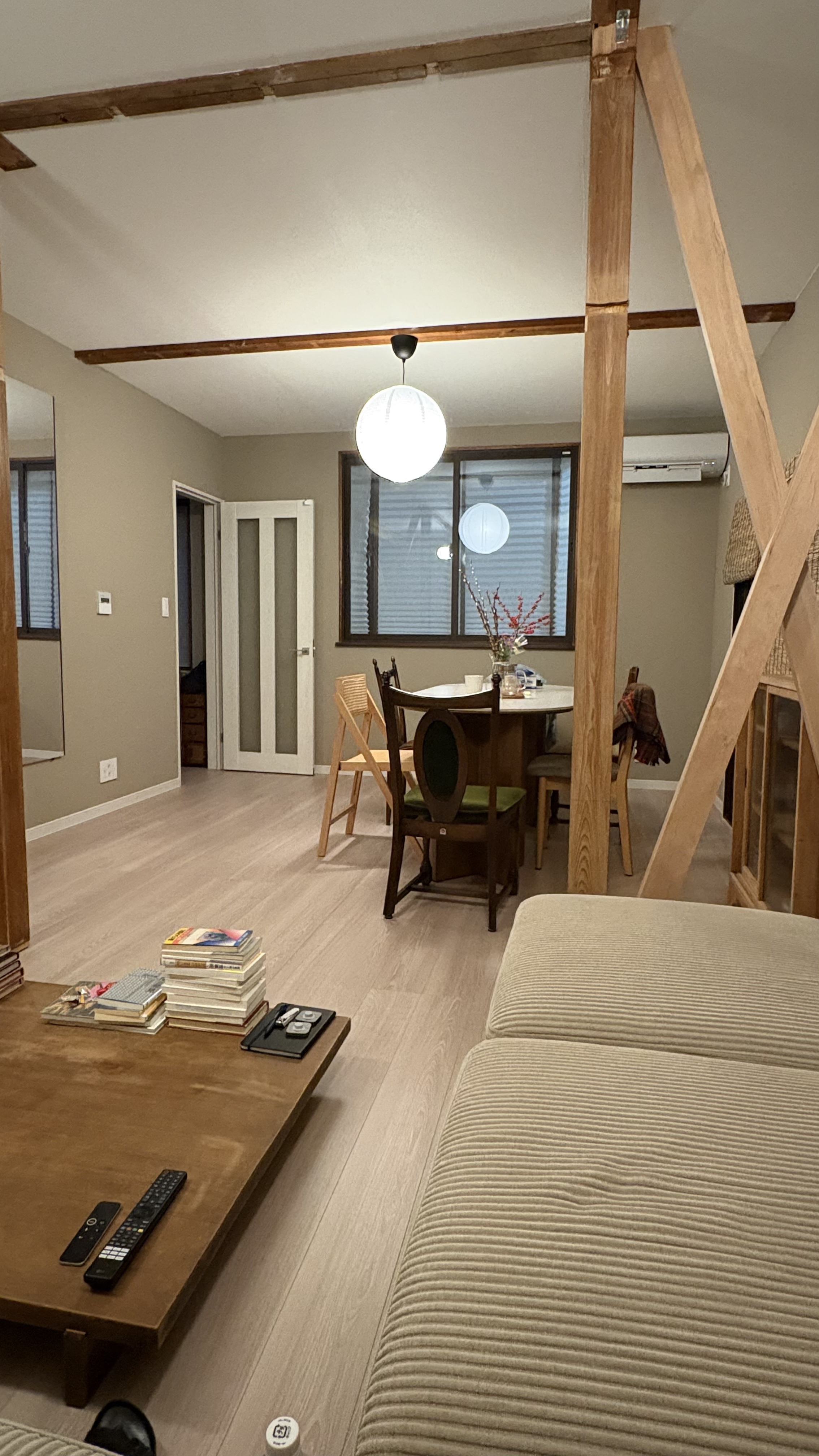
There’s maintenance, too. Old houses require attention in a way that modern ones don’t. The relationship is more active. You pay attention to the rainy season, to how the wood is doing, to the small things that need addressing before they become bigger ones. I won’t pretend this isn’t sometimes inconvenient. But it changes your sense of time. Life here moves at a different pace. Slower. More seasonal. More present.
What guests see
The reaction when people visit for the first time is always the same. They step inside, and they pause. Not from hesitation — from something that takes a moment to identify. I think it’s recognition. Even people who have never been in a house like this before seem to feel something familiar, something they didn’t know they were missing. They slow down without being asked to. They speak more quietly. They move carefully, like they understand instinctively that this place deserves that.
One friend told me it felt like visiting someone else’s memory. That’s the closest anyone has come to describing it.
Why it’s worth it
Akiya daily life is not frictionless. Some mornings the cold bites, some repairs take longer than planned, and there are days when the house demands more than I have to give it. But there’s a depth here that I’ve never found anywhere else. A feeling of being connected to something larger than any single lifetime — all the people who ate in this kitchen, who watched rain from this window, who grew old inside these walls.
That feeling is worth a lot of drafts.
If you want to experience what life in a Japanese traditional home actually feels like — not just see it from the outside — I’d love to show you. My tour of this akiya in Tokyo is an invitation into that world: the sounds, the materials, the stillness, and the stories the house has collected over the years.
Get the akiya cost breakdown we won't publish publicly
Join for renovation numbers, contractor lessons, sourcing notes, and behind-the-scenes updates from our Tokyo akiya.
Want the real akiya numbers, not just the pretty photos?
Subscribe for renovation cost breakdowns, contractor lessons, antique finds, and the next story before casual visitors see it.
No spam. Just the strongest restoration stories, real costs, and occasional tour news.