Akiya vs Regular House in Japan: What's the Difference?
By Minseon
When someone first hears about akiya — Japan’s abandoned houses — the obvious question is: why not just buy a regular house instead?
It’s a fair question. And the honest answer is that for many people, a regular house is the better choice. But not always. Understanding the difference matters more than the ads suggest.
The Short Version
A regular house in Japan is a property that someone has been living in, maintaining, and actively using. It enters the market because someone is relocating, upsizing, or selling an investment property.
An akiya is a house that has sat empty — sometimes for months, sometimes for decades. The owners stopped maintaining it, stopped living in it, and eventually stopped paying attention to it.
The difference is not cosmetic. It’s structural, financial, and legal.
What They Have in Common
First, the similarities matter:
- Legal process: Both follow the same purchase procedure in Japan — fudosan (real estate) agents, a purchase contract, registry at the legal affairs bureau, and the same transfer taxes and closing costs.
- Financing: Both can be purchased with cash or financed with a mortgage. Foreigners can buy both.
- Ownership rights: There is no special legal status for akiya. The property rights are the same.
- Building codes: Both are subject to Japan’s building standards and earthquake compliance rules. Pre-1981 structures require seismic assessment regardless of whether they’re ‘akiya’ or regular houses.
- Location: The most desirable urban akiya are in the same neighbourhoods as regular houses — Setagaya, Suginami, Nerima, Kamakura.
Where They Differ
Purchase motivation
Regular house buyers typically have a clear timeline and use case. The property is on the market because the current owner is leaving it.
Akiya are often on the market because no one wants them — which means the buyer needs to understand why it was abandoned. Rural depopulation, inheritance complications, or condition that makes financing harder are common reasons.
Urban akiya in Tokyo are different. Many were rental properties or second homes that the owners stopped maintaining. They sell quickly when listed at a realistic price.
Condition at purchase
A regular house is typically move-in ready or requires minor cosmetic work. The previous owner has been maintaining it, utilities are active, and the structure is in documented condition.
An akiya often requires a full assessment before you know what you’re buying. Water damage, pest damage, structural deterioration, and missing utilities are common. The purchase price reflects this — but the renovation budget needs to account for it properly.
Renovation scope
This is where the difference is most pronounced.
Get the akiya cost breakdown we won't publish publicly
Join for renovation numbers, contractor lessons, sourcing notes, and behind-the-scenes updates from our Tokyo akiya.
A regular house in Tokyo might need a fresh coat of paint, new flooring, and updated fixtures. A typical cosmetic renovation runs ¥1M–¥3M for a 100m² house.
An akiya might need everything — new systems, structural repair, seismic retrofitting, damp remediation, and full finishes. Full renovations for urban akiya in Tokyo commonly run ¥5M–¥15M. In some cases, the renovation costs exceed the purchase price by 3–5x.
This is not a problem. It’s a feature. That gap between purchase price and renovation cost is how you create something extraordinary. But you need to budget for it honestly.
Carrying costs during renovation
A regular house sale typically closes and you move in within weeks.
An akiya purchase closes, then the renovation begins — and that process takes months. During renovation, you’re paying for the property, possibly temporary accommodation, and the renovation itself. Many first-time akiya buyers underestimate the carrying cost period.
Financing complexity
Banks generally treat urban akiya similarly to regular houses if the property is liveable. Rural akiya can be harder to finance — some banks won’t lend on properties in areas with heavy depopulation, or will lend at lower loan-to-value ratios.
For a regular house in a major city, financing is straightforward for both residents and non-residents.
The Question to Ask Yourself
Before choosing between an akiya and a regular house, ask this:
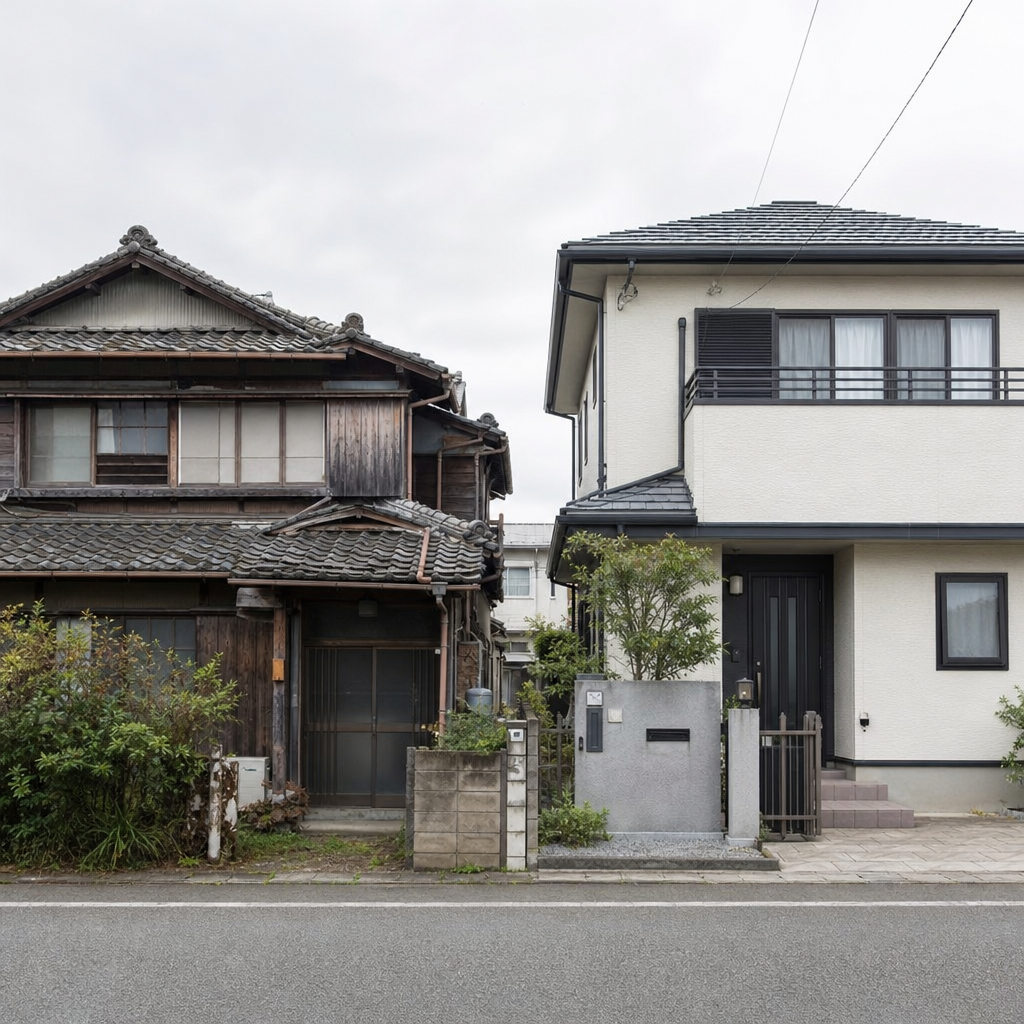
Do I want a project, or do I want a home?
Neither answer is wrong. But mixing them up is where people get into trouble.
A regular house is someone else’s project. You get move-in convenience in exchange for higher purchase price and someone else’s design choices.
An akiya is your project. You get lower purchase price and total freedom in exchange for renovation time, budget, and uncertainty.
Many people who restore akiya will tell you the same thing: the house became their project precisely because they wanted something that couldn’t be found on the regular market. A regular house that someone else had already finished renovating wouldn’t have felt like theirs.
When a Regular House Makes More Sense
If you are:
- On a tight timeline (renovations take 6–18 months)
- Not comfortable managing contractors or construction projects
- Uncertain about your long-term plans in Japan
- Looking for something that is immediately liveable and functional
…then a regular house is probably the right choice. The renovation path is not the only path to a beautiful home in Japan.
When an Akiya Makes More Sense
If you want:
- A property in a specific urban location where regular houses are expensive
- Genuine freedom to design without someone else’s constraints
- A structure with character, history, and materials that can’t be replicated
- A project that becomes a story, not just a dwelling
…then an akiya might be right for you. The restoration path is harder, but the result is different in ways that matter.
The Bottom Line
Akiya vs regular house is not a question of better or worse. It’s a question of what you’re willing to take on — and what you want to get out of it.
The regular housing market in Japan is functional and accessible. The akiya path is less conventional, more demanding, and often more rewarding for the people who are suited to it.
If you’re weighing the two, the best next step is to see one in person. That goes for both regular houses and restored akiya. The decision that sounds right on paper either confirms itself or changes when you’re standing inside the actual property.
If you’d like to understand the renovation side better before deciding, here’s a realistic breakdown of what akiya renovation costs in Tokyo.
And if you’re ready to see what all of this actually looks like when it’s finished — book a tour of our Setagaya akiya. You’ll walk through the renovation decisions we made, the materials we chose, and what we learned doing it.
Get the akiya cost breakdown we won't publish publicly
Join for renovation numbers, contractor lessons, sourcing notes, and behind-the-scenes updates from our Tokyo akiya.
Want the real akiya numbers, not just the pretty photos?
Subscribe for renovation cost breakdowns, contractor lessons, antique finds, and the next story before casual visitors see it.
No spam. Just the strongest restoration stories, real costs, and occasional tour news.