The Hidden Costs of Restoring an Akiya in Japan (That Nobody Warns You About)
By Minseon
There’s a version of the akiya story that goes like this: find an abandoned house for almost nothing, spend a little to fix it up, live beautifully in Japan. The internet loves this version.
I lived the other version.
I restored a wooden akiya in Setagaya, Tokyo, and the renovation was a significant cost on top of the purchase price — in money, in time, and in ways that were harder to quantify. If you’re seriously considering an akiya project, here’s what most akiya renovation cost articles rarely cover.
The Purchase Price Is the Easy Part
Low acquisition cost is real. There are genuinely cheap — and sometimes free — houses in Japan, especially in rural areas and ageing urban neighborhoods. But the purchase price is almost irrelevant once you understand the scope of what follows.
The renovation is where the money goes. Not just a little money — a significant portion of your total budget, often running into the millions of yen for a full house, sometimes several times the purchase price. Anyone who tells you otherwise either renovated a very small space or didn’t do it properly.
Go in knowing this from the start.
What’s Hiding Inside the Walls
On first walkthrough, our house looked like a lot of work but nothing unmanageable. Then we opened the walls.
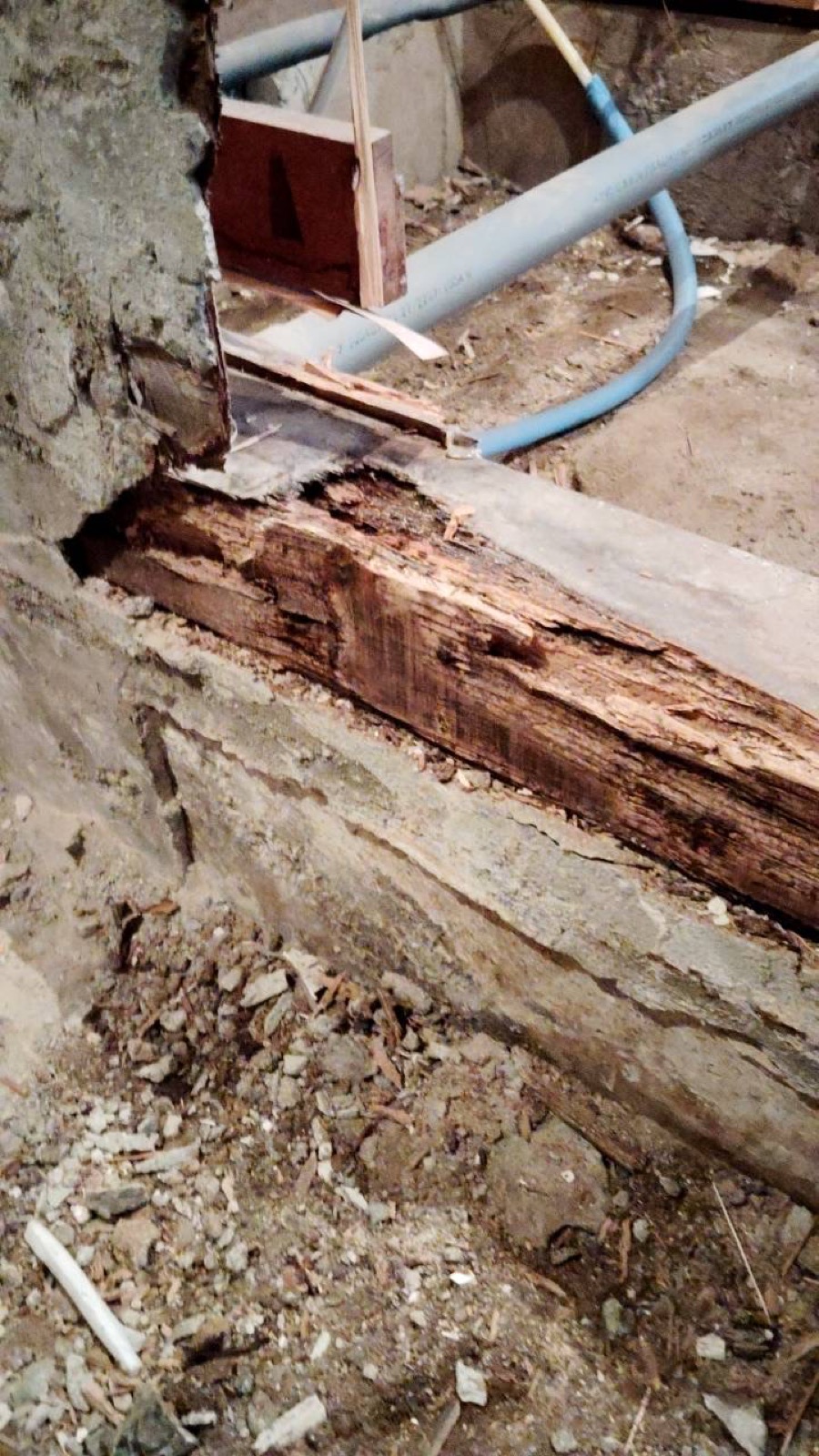
Rot in the structural timbers. Old wiring that predated any sensible safety standard. Foundation sections that had been quietly failing for years without any visible sign from outside. Every akiya carries decades of deferred maintenance inside it, and you don’t know exactly what you’re dealing with until demolition begins.
This is why a contingency budget isn’t optional — it’s the most important line item in your plan. Whatever number you’ve budgeted for structural work, assume there’s more hiding. There usually is. I priority-coded the 11 things I’d do differently into our renovation cost spreadsheet — useful as a pre-flight check before you sign anything.
Seismic Compliance Is Not Optional
Japan updated its seismic building codes in 1981. Any house built before that year — and many built after — will need 耐震工事 (taishin kōji, seismic reinforcement) to meet current standards. This isn’t a suggestion. If you’re renovating, you’re doing this work.
For our akiya, seismic compliance meant stripping the interior back to the frame, bringing in a structural engineer, replacing rotted foundation timbers, adding steel bracing and shear walls, and re-doing the insulation from scratch. The full story is here, but the short version: it was the single largest cost category in our entire renovation.
Get the akiya cost breakdown we won't publish publicly
Join for renovation numbers, contractor lessons, sourcing notes, and behind-the-scenes updates from our Tokyo akiya.
If you’re researching hidden costs of akiya restoration, seismic work is often the one that surprises people most — not because it’s unexpected in principle, but because the actual scope is hard to anticipate until your walls are already open.
Waste Disposal Costs More Than You Think
An abandoned house doesn’t come empty. It comes with decades of accumulated furniture, appliances, garden overgrowth, old fixtures, and material that has no place in a renovated home. Getting rid of all of it has a real price.
We learned this the hard way during our outdoor space restoration. Private disposal companies charge by volume, and the volume from a full renovation is staggering. Structural demolition alone generates more waste than you can picture. Budget for it explicitly, or you’ll find yourself making uncomfortable choices mid-project.
Skilled Craftspeople Are Both Scarce and Expensive
A modern renovation can use general contractors and standard materials. An akiya restoration that respects the original character — the kind worth doing — needs people with specific skills.
Traditional plasterers who work with shikkui (漆喰) lime plaster. Tatami makers who understand traditional room proportions. Shoji paper artisans. Carpenters who know how old wooden joints actually work.
These people exist. They are not cheap, and they are not waiting around for your call. Lead times run long, schedules are limited, and their rates reflect the rarity of what they know. If your renovation depends on any traditional craft element, factor in both the cost and the timeline — and build in buffer for both.
Time Is a Cost Category
Every akiya article has a timeline buried somewhere: “six months,” “a year,” “two years.” The real answer is: longer than you planned.
And time has carrying costs. While the renovation runs, you’re paying for the house, potentially for somewhere else to live, for utilities to be reconnected (which has its own process and fees), and for insurance during the construction period. These aren’t dramatic line items, but they accumulate quietly across a multi-month project.
Our renovation took about a year of active work. Looking back, that was probably optimistic given what we found inside those walls.
The Emotional Cost
This one doesn’t appear in any budget spreadsheet.
Every akiya contains someone’s history. You will stand in front of things — furniture, fixtures, personal objects left behind — and have to decide what stays and what goes. Not every decision is easy.
There’s also the sustained weight of uncertainty: not knowing what the next wall will reveal, whether the timeline will hold, whether the budget will survive. For months, maybe longer, the project is unfinished. That wears on you in ways that are hard to describe until you’re inside it.
This isn’t a reason not to do it. It’s a reason to go in honest.
Knowing all this going in doesn’t diminish the reward — it just means you walk in with eyes open. The house we have now has a depth and character that nothing new-built could offer. Every restored beam, every hand-plastered wall, every decision we agonized over is visible in the result.
If you want to see what it looks like when the work is done, come visit.
Book a tour on Airbnb — small groups, English available, Setagaya, Tokyo.
Related reading: Seismic retrofit for an old Japanese house · What is akiya restoration? · Is it safe to live in an old Japanese house?
Get the akiya cost breakdown we won't publish publicly
Join for renovation numbers, contractor lessons, sourcing notes, and behind-the-scenes updates from our Tokyo akiya.
Want the real akiya numbers, not just the pretty photos?
Subscribe for renovation cost breakdowns, contractor lessons, antique finds, and the next story before casual visitors see it.
No spam. Just the strongest restoration stories, real costs, and occasional tour news.