How Long Does It Really Take to Buy an Akiya in Japan?
By Minseon
Most articles about buying an akiya focus on how to find one, how much they cost, and what renovation involves.
Almost none address the question you start asking the moment you see a property you like: how long until this is actually mine?
The honest answer is: it depends. And the range is wider than you probably expect.
Why the Timeline Matters More Than You Think
Before getting into specifics, it’s worth understanding why this matters for your planning.
If you’re buying from abroad and need to arrange travel, you can’t just show up and sign paperwork. If you’re selling another property to fund the purchase, the timing has to align. If you’re arranging financing, the bank’s timeline affects everything. And if you’re buying an auction property, the 30-day payment deadline is fixed — miss it and you lose your deposit.
Getting the timeline wrong doesn’t just cause inconvenience. It can cost you the property.
The Three Main Paths — and Their Timelines
Path 1: Brokerage Purchase (2 weeks to 2 months)
The most straightforward path. You find a property listed with a real estate agent, negotiate directly, and the agent guides you through the process.
This is similar to buying any property in Japan — and is the path most commonly used for urban akiya in good condition.
Typical timeline:
- Offer acceptance: Day 1
- Due diligence and inspection: 1–2 weeks
- Purchase contract signing: Week 2–3
- Closing/registration: Week 3–4
The actual closing can be remarkably fast once you’ve agreed on terms. The bottleneck is almost always the due diligence — particularly if the title investigation reveals anything that needs clarification.
Path 2: Auction Purchase (3 to 6 months)
Auctions are faster to start (you can bid immediately on listed properties) but slower to finish if you win.
Typical timeline:
- Auction registration and due diligence (before bidding): 2–4 weeks
- Bidding and winning: varies
- Payment: 30 days from winning
- Post-auction registration: 2–3 weeks
- Eviction (if occupied): 1–3 months — this is the wildcard
The eviction timeline for auction properties is the least predictable part. Japan has strong tenant protections, and even former-owner occupants who refuse to leave require a formal legal process. Professional investors budget 3–6 months for this. Some buyers have moved in within weeks; others have waited over a year.
Path 3: Municipal or Regional Program Purchase (2 to 4 months)
Rural municipalities running akiya incentive programs have their own processes. These vary by municipality but are typically faster than brokerage purchases because the programs are designed to reduce administrative friction.
Get the akiya cost breakdown we won't publish publicly
Join for renovation numbers, contractor lessons, sourcing notes, and behind-the-scenes updates from our Tokyo akiya.
Typical timeline:
- Initial inquiry and property selection: varies
- Municipality review and approval: 2–6 weeks
- Contract and closing: 2–4 weeks
The key variable is whether the municipality requires you to attend an in-person interview or viewing — some do, some allow remote participation, and some require you to physically visit before purchase approval.
What Slows Everything Down
In any path, certain factors commonly extend timelines:
Title complications — If the previous owner died and the estate hasn’t been settled, or if there are multiple co-owners with conflicting interests, the title investigation takes longer. Old properties in particular can have decades of accumulated ownership complexity.
Financing arrangements — If you’re borrowing from a Japanese bank, loan approval adds 2–6 weeks to the process. Most sellers expect you to have pre-approval before making an offer.
Property inspection findings — If the inspection reveals asbestos, structural issues, or hazardous materials, you may need to renegotiate terms or walk away. Either way, this adds time.
Absentee owner — If the seller can’t be easily reached (common for long-vacant rural properties), getting the necessary signatures extends the process significantly.
What You Can Do to Move Faster
A few things genuinely speed up the process:
Get pre-approved for financing before you start serious searching. This removes the biggest variable. When you find a property you want, you’re ready to move.
Use a buyer’s agent who speaks your language. The agent handles almost all coordination. A good bilingual agent who understands both Japanese real estate conventions and foreign buyer expectations is worth their fee — they prevent the back-and-forth that extends timelines.
Do your due diligence before you bid at auction. Most auction platforms allow registered buyers to inspect properties. Use that time. Budget for a full inspection. The 30-day clock starts the moment you win, and you cannot extend it.
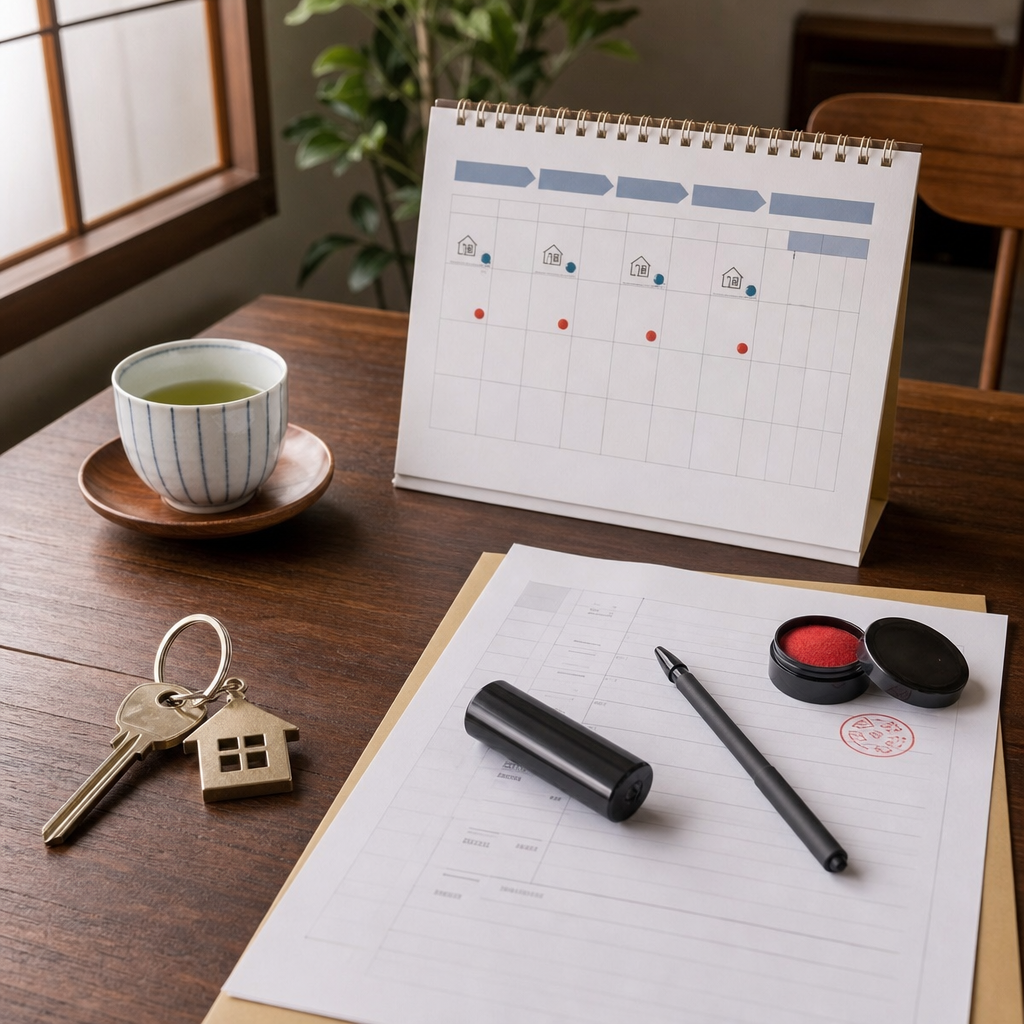
Start the hanko (registered seal) process early. If you’re buying as an individual, you’ll need a registered seal for the purchase contract. This takes 1–2 weeks at your local ward office (区役所). Do this before you start seriously looking.
The Honest Bottom Line
For most buyers: plan for 2–3 months from offer to keys.
If you’re buying at auction: plan for 4–6 months minimum — and treat the eviction timeline as a wildcard that could extend it further.
If you’re buying remotely from abroad: add 1–2 weeks for coordination and any in-person requirements.
The process rewards patience and preparation. Rush it and you either pay too much, buy a problem you didn’t see, or lose the property to someone who was better prepared.
Planning your own timeline? Book the Akiya Tour in Setagaya on Airbnb → — see a finished renovation in person and ask us how long each stage really took, from first viewing to move-in.
Related reading: Can foreigners buy an akiya in Japan? · How to find an akiya in Japan · The hidden costs of akiya renovation
Get the akiya cost breakdown we won't publish publicly
Join for renovation numbers, contractor lessons, sourcing notes, and behind-the-scenes updates from our Tokyo akiya.
Want the real akiya numbers, not just the pretty photos?
Subscribe for renovation cost breakdowns, contractor lessons, antique finds, and the next story before casual visitors see it.
No spam. Just the strongest restoration stories, real costs, and occasional tour news.