What to Expect on the Akiya House Tour in Tokyo
By Minseon
I get a lot of messages from people asking what the akiya tour Tokyo experience is actually like. So here’s my honest answer before you book.
This isn’t a museum visit. There’s no audio guide, no laminated fact sheet, no velvet rope separating you from the things. It’s my home — a house I rescued from abandonment in Setagaya — and I’m inviting you in to see it, talk about it, and understand how it came back to life.
That’s the short version. Here’s the longer one.
Getting There: Komazawa Daigaku Station
We meet at Komazawa Daigaku station, on the Denentoshi Line in Setagaya. From there, we walk to the house together.
I love this part of the tour, even before we arrive. Setagaya is one of Tokyo’s quieter residential wards — the kind of neighborhood where small temples appear between houses, where you notice the age of things. As we walk, you start to get a feel for the area: the scale, the texture, the kind of streets that still have room for akiya like this one.
By the time we reach the house, you’re already in the right headspace.
What You’ll See
The exterior is the first thing that surprises people. I’ll show you what it looked like before — the photos tell a story that’s hard to convey in words. Overgrown, weathered, the kind of house that neighbors had stopped seeing because it had been empty so long. Then you look at it now.
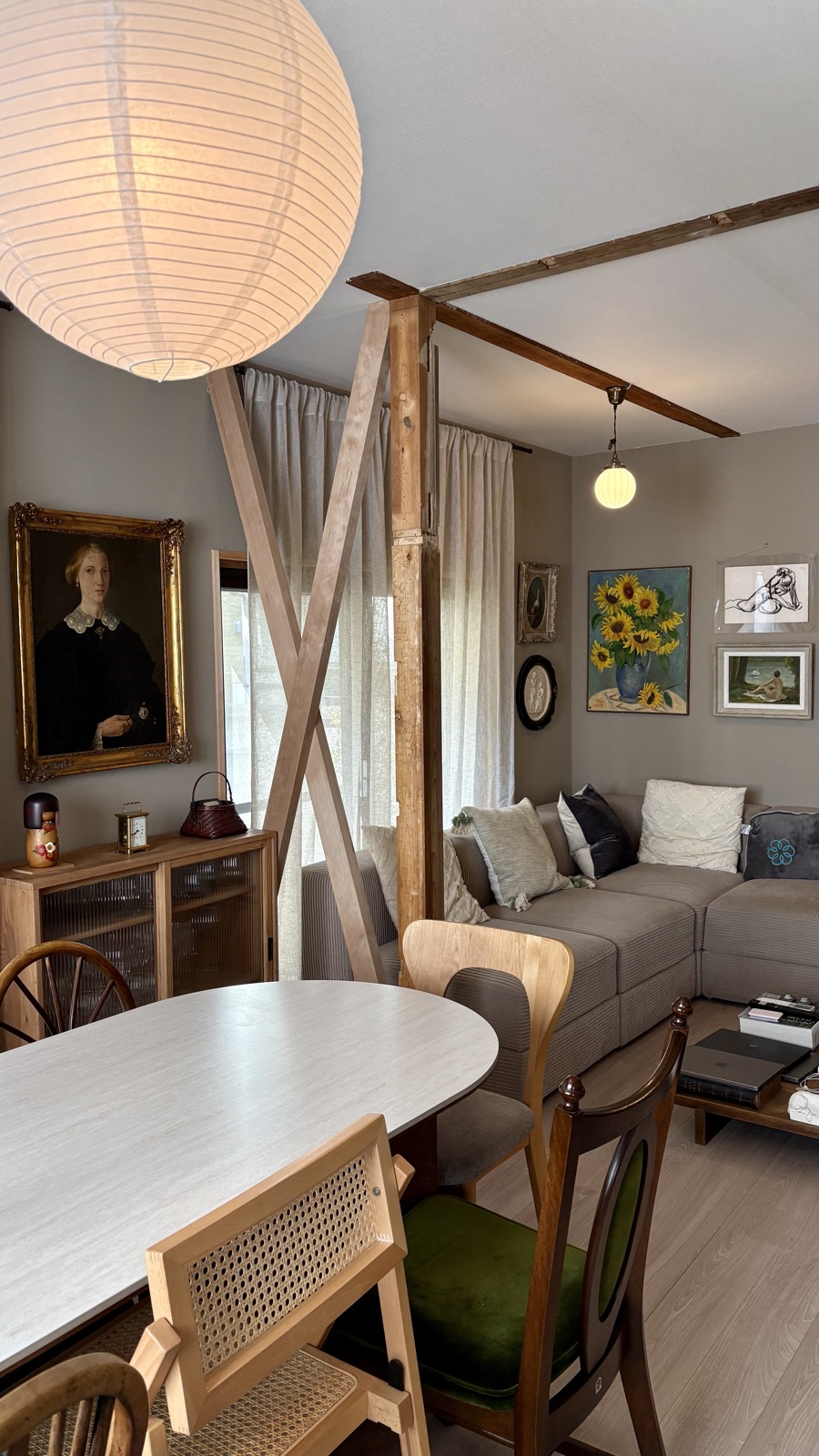
Inside, we go through the whole restoration story: what was original, what was saved, what had to go, and the decisions that shaped the space it became. The architecture is a mix of eras — traditional Japanese construction alongside signs of later additions and repairs. There’s a washitsu with shikkui plaster walls that took real work to preserve. There are vintage objects throughout the house: some were found here, some I tracked down and chose carefully. Each one has a reason for being where it is.
And then there’s the seismic bracing. Old wooden houses in Japan often need structural reinforcement, and the instinct is usually to hide it inside the walls. I made a different choice — it’s visible, and it’s become one of my favorite things about the space. Engineering as design.
Get the akiya cost breakdown we won't publish publicly
Join for renovation numbers, contractor lessons, sourcing notes, and behind-the-scenes updates from our Tokyo akiya.
We’ll talk through all of it. You can ask questions. You can look closely at things. There’s no rush.
Who This Tour Is For
The people who seem to get the most out of this experience tend to fall into a few categories: those who are genuinely curious about old Japanese architecture, people researching akiya because they’re thinking about buying or restoring one themselves, anyone drawn to wabi-sabi aesthetics, and visitors who’ve seen enough of the usual Tokyo and want something that feels real.
You don’t need to be an architecture expert or know anything about renovation. You just need to be curious.
One thing worth knowing: the tour is for guests aged 20 and up. Groups are small — a maximum of six people — which means there’s actual space for conversation rather than everyone standing at a polite distance straining to hear.
Practical Info
Here’s everything you need to know before booking:
- Price: ¥10,000 per person
- Group size: Up to 6 guests
- Age: 20 and up
- Languages: English, Italian, Japanese, Korean
- Cancellation: Free cancellation up to 1 day before
- Meeting point: Komazawa Daigaku station, Setagaya, Tokyo
- Booking: via Airbnb Experiences
What Makes It Different
I’ve had guests who’ve done a lot of “cultural experiences” in Tokyo. They often say this one felt different. I think I know why.
There’s no script. I know the house deeply — every decision, every object, every wall — so the conversation goes wherever it naturally goes. If you want to talk about the structural challenges of restoring an old Japanese house, we can do that. If you want to know where I found a particular piece of furniture and why it ended up in that corner, I can tell you. If you just want to look and absorb quietly for a few minutes, that’s fine too.
It’s a real home. I live here. That changes the feeling of being in the space.
Tokyo has a lot to offer, and most of it is very well organized for visitors. This is something a bit different: a door that opens into the slower, older, quieter side of the city — and someone who’s happy to tell you everything about what it took to get there.
Ready to visit? Book your spot on Airbnb Experiences — small groups fill up quickly, and I’d love to see you at the station.
Related reading: What is a tatami room? · What is shikkui? · Can foreigners buy an akiya in Japan?
Get the akiya cost breakdown we won't publish publicly
Join for renovation numbers, contractor lessons, sourcing notes, and behind-the-scenes updates from our Tokyo akiya.
Want the real akiya numbers, not just the pretty photos?
Subscribe for renovation cost breakdowns, contractor lessons, antique finds, and the next story before casual visitors see it.
No spam. Just the strongest restoration stories, real costs, and occasional tour news.