What Is a Tatami Room? Everything You Should Know About Japan's Most Traditional Space
By Minseon
When I first stepped into the tatami room of an akiya I was visiting in Tokyo, I was struck by how much the space said without saying anything at all. The soft give of the floor underfoot, the faint green-grassy scent in the air, the way the afternoon light filtered through paper screens — it felt like stepping into another era. If you’ve ever wondered what a tatami room actually is, you’re not alone. Many visitors to Japan encounter these spaces without quite knowing what makes them so different from any room they’ve been in before.
What Are Tatami Mats?
At the heart of every tatami room is, naturally, the tatami mat itself. Traditional tatami are made from a core of compressed rice straw (wara) wrapped in a woven surface of igusa — a type of rush grass that grows primarily in Kumamoto prefecture. The edges are typically finished with a cloth border called heri.
The result is a mat that’s firm but not hard, slightly springy underfoot, and naturally fragrant. Fresh tatami smells faintly of green grass and earth — a scent so distinct that many Japanese people associate it instantly with calm, with home, with something deeply familiar. Over time the mats age from pale green to golden yellow, and the scent mellows, but never fully disappears.
Tatami mats come in standard sizes that historically varied by region — Kyoto-size, Tokyo-size, Nagoya-size — and rooms are still described in Japan by how many mats they hold. A “six-mat room” or “eight-mat room” tells you immediately how large the space is.
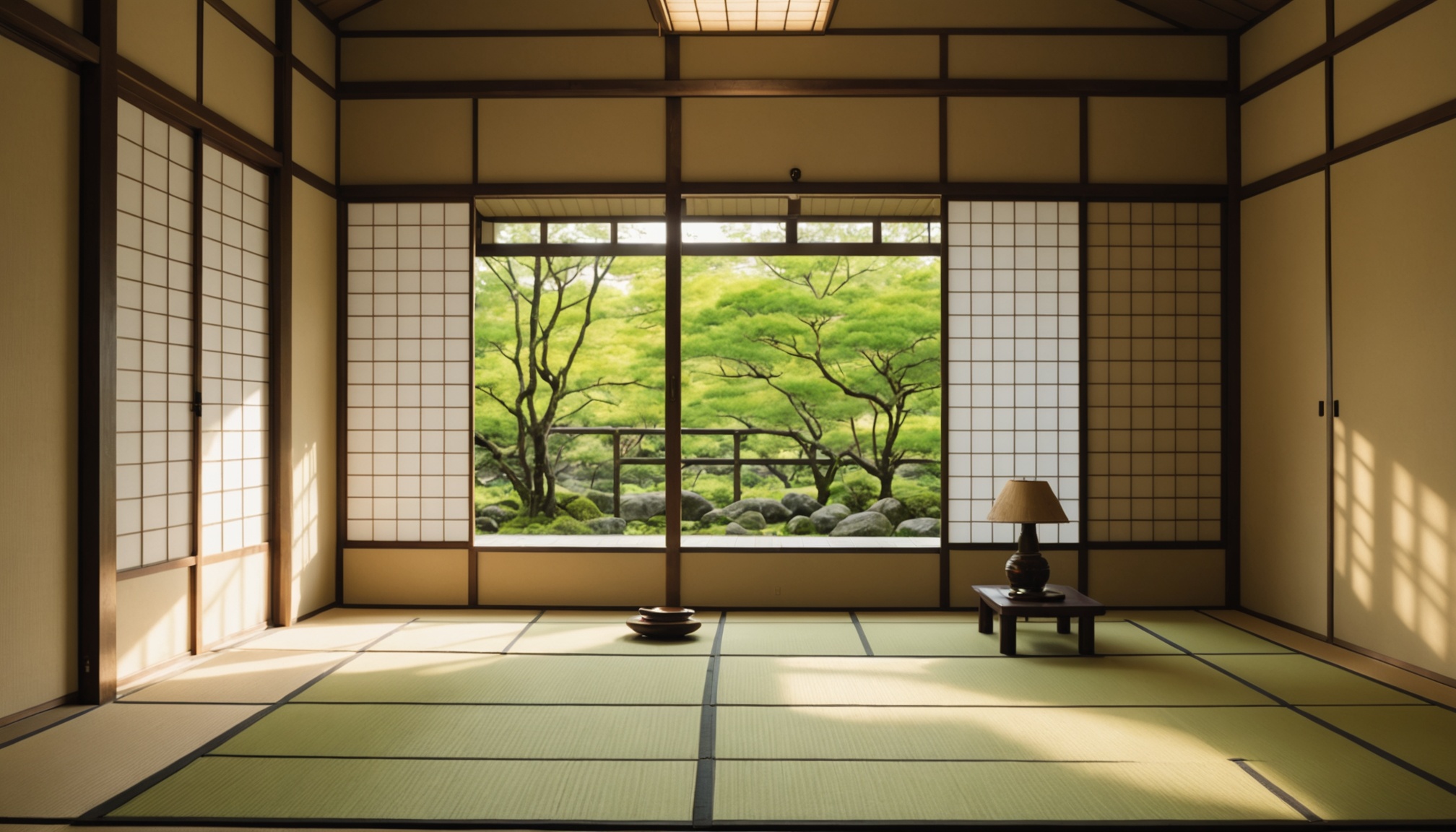
What Makes a Washitsu?
A washitsu (和室) — literally “Japanese-style room” — is more than just a floor covered in tatami. It’s an entire design system that evolved over centuries to create a space that is both functional and quietly beautiful.
The key elements:
Shoji screens — Sliding panels made from a wooden lattice and translucent washi paper. They diffuse light beautifully, giving washitsu their characteristic soft, even glow. Unlike glass windows, shoji filter the outside world rather than simply displaying it.
Fusuma sliding doors — Opaque sliding panels that divide spaces within the room or connect rooms together. Traditionally decorated with ink paintings or subtle patterns, fusuma allowed a single large space to be reconfigured as needed.
Get the akiya cost breakdown we won't publish publicly
Join for renovation numbers, contractor lessons, sourcing notes, and behind-the-scenes updates from our Tokyo akiya.
Tokonoma alcove — A recessed decorative alcove, usually featuring a hanging scroll (kakejiku) and a simple flower arrangement or ceramic piece. The tokonoma is the spiritual and aesthetic focal point of the room — the one place where art is deliberately displayed.
Ranma transom — Decorative wooden panels above the fusuma, often carved with lattice or nature motifs, allowing air circulation between rooms while adding visual interest.
Together, these elements create a space that breathes — literally and figuratively. The materials are natural, the light is soft, and the layout encourages a slower, lower way of living: sitting on cushions, sleeping on a futon laid directly on the tatami.
Why Tatami Rooms Disappeared — And Why They’re Coming Back
Through much of the postwar period, washitsu fell out of fashion. Western-style furniture became a symbol of modernity, and tatami rooms were seen as impractical — difficult to maintain, incompatible with chairs and beds, and expensive to restore when mats aged and tore. New apartments were increasingly built without them entirely.
But something has shifted. Younger generations in Japan are rediscovering washitsu as spaces of calm in an overstimulated world. The rise of wellness culture, the renewed interest in traditional craftsmanship, and a broader appreciation for wabi-sabi — the beauty of imperfection and age — have all contributed to a quiet tatami revival. Interior designers are incorporating tatami platforms into otherwise contemporary homes, and guests at traditional ryokan inns consistently name the washitsu experience as one of their most memorable.
The Experience No Photo Can Capture
I’ve seen a lot of beautiful images of tatami rooms. And they never quite get it right.
They can’t capture the way the floor gives slightly when you walk on it — not soft like carpet, but yielding in a way that’s strangely grounding. They can’t convey the quiet. A well-built washitsu absorbs sound in a way that modern rooms simply don’t. And they definitely can’t transmit the scent — that clean, dry, faintly sweet smell of igusa that hits you the moment you slide open the door.
A tatami room is one of those spaces you need to be in to understand.
Akiya and the Washitsu Within
Many of Tokyo’s akiya — abandoned or vacant old homes — contain washitsu that have sat untouched for years, sometimes decades. In some cases they’ve been preserved beautifully, their tatami golden with age, their shoji still intact. In others, the mats are damaged, the fusuma warped, the tokonoma bare. But even in that state, the bones of something remarkable are often still there.
Restoring a washitsu is one of the most meaningful parts of the akiya journey — it’s a conversation between present and past, a choice to preserve something that took generations to develop.
The best way to understand what a tatami room actually is? Step into one.
If you’re curious about akiya, about washitsu, and about what it feels like to walk through a real Tokyo townhouse with history embedded in its floors and walls, I’d love to share that experience with you. Join me on the Akiya Tokyo Tour →
Related reading: What is shikkui? Japan’s traditional lime plaster · What is a kominka? · What it’s actually like to live in an old Japanese house
Get the akiya cost breakdown we won't publish publicly
Join for renovation numbers, contractor lessons, sourcing notes, and behind-the-scenes updates from our Tokyo akiya.
Want the real akiya numbers, not just the pretty photos?
Subscribe for renovation cost breakdowns, contractor lessons, antique finds, and the next story before casual visitors see it.
No spam. Just the strongest restoration stories, real costs, and occasional tour news.