How I Furnished Our Restored Akiya Using Yahoo Auctions Japan (With Almost No Budget)
By Minseon
When we finished the structural work on our akiya in Setagaya, I started looking for furniture on Yahoo Auctions Japan — and it changed how I think about furnishing old houses entirely. The day we got the keys, the house was almost completely empty. The previous owners had taken most things with them. What remained was a locked storage closet and a small shelf someone had forgotten in the hallway.
After months of structural work — seismic bracing, foundation repair, new flooring — we finally had a livable space. I was excited. I walked into a furniture store nearby and quickly understood the problem.
Nothing felt right.
Putting IKEA shelves in a 1980s wooden house felt like a contradiction. The house had a kind of age to it — slightly uneven columns, plaster walls with texture, window frames with layers of old paint. Brand-new, perfectly finished furniture made all of that feel like flaws instead of character.
That’s when I stopped buying new furniture entirely.
Why Old Houses Need Old Things
This isn’t just a wabi-sabi philosophy point — it’s practical.
Old houses are full of handmade imperfections. Columns that aren’t quite plumb. Floors with a gentle slope toward one corner. Window frames worn smooth from decades of use. When you bring new, uniform furniture into that environment, the contrast draws attention to every one of those imperfections.
But put in an old tansu with its own small nicks and uneven patina, and something shifts. The imperfections in the furniture and the imperfections in the house start speaking the same language. The space settles.
Using Yahoo Auctions Japan for Antique Furniture
My main sourcing tool became Yahoo! Auctions Japan (jp.mercari.com is also useful, but Yahoo Auctions has better inventory for older pieces).
The search terms that work best for me:
箪笥 昭和(tansu, Showa era)桐箪笥 時代物(paulownia tansu, period piece)和箪笥 古道具(Japanese chest, antique goods)民芸箪笥(mingei-style tansu)水屋箪笥(mizuya — kitchen cabinet style, great for storage)
One tip: avoid searching アンティーク (antique) because it triggers premium pricing. Search 古道具 (old tools/objects) or 昭和レトロ instead and you’ll find the same quality at a fraction of the price.
Get the akiya cost breakdown we won't publish publicly
Join for renovation numbers, contractor lessons, sourcing notes, and behind-the-scenes updates from our Tokyo akiya.
What to Look for in the Photos
Listings with fewer than 4–5 photos are usually hiding something. Here’s what I check:
- Photos with drawers open — look for interior staining, mold, or water damage
- Underside and back panel — rot and cracking show up there first
- Hardware condition — surface rust is fine and fixable, but bent or warped metal is not
- Silhouette from the side — warping or leaning shows up clearly from this angle
If the listing has any ambiguity, I always message the seller and ask for additional photos. Sellers who respond promptly with close-up shots are generally more trustworthy.
Costs
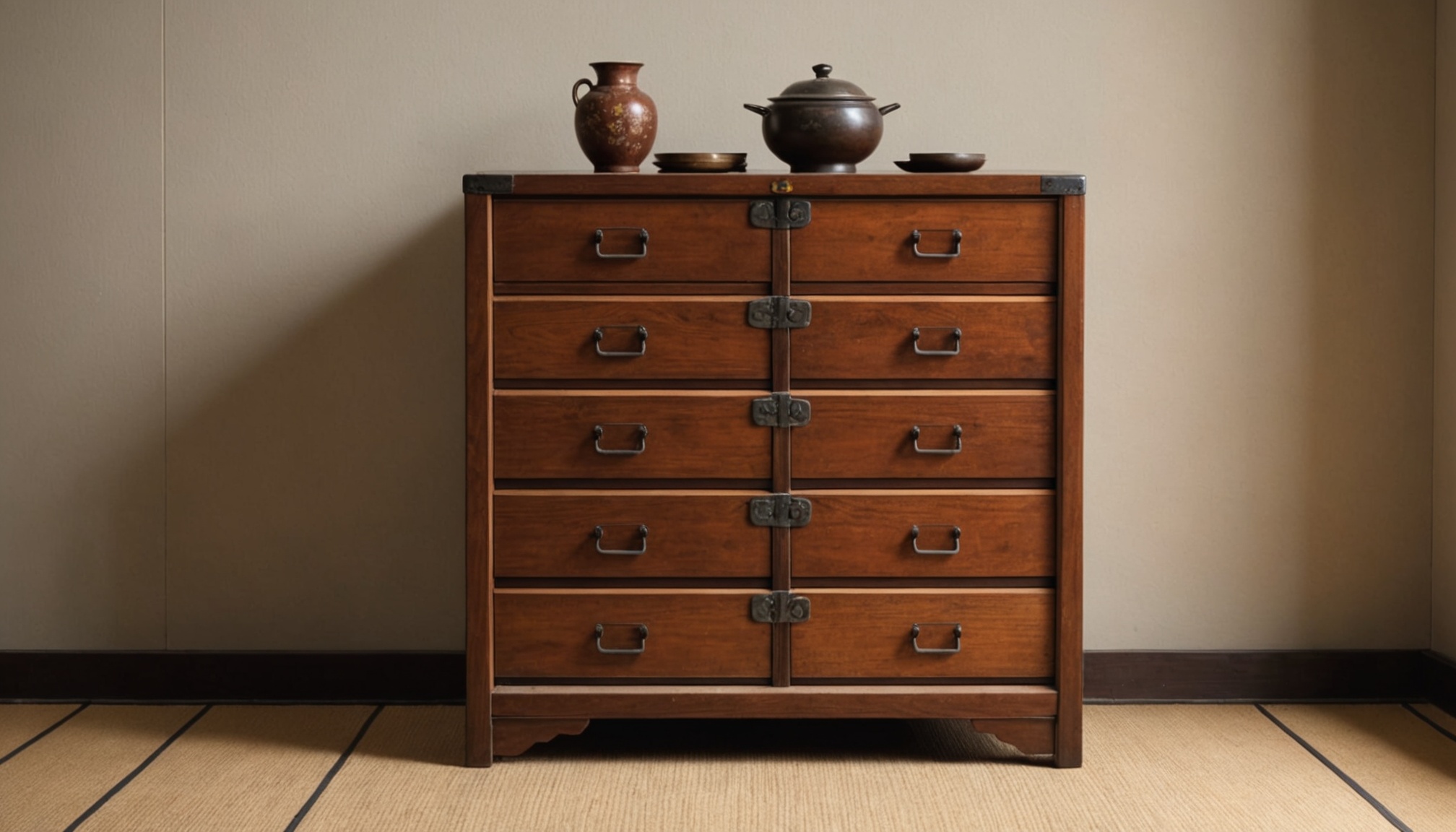
The tansu you see in our home came from Yahoo Auctions for a fraction of what it would cost at a dealer. Shipping for large wooden pieces in Japan can add up, but if you’re buying multiple items from the same seller, it’s worth asking whether they’ll combine shipping — many will.
For context: a comparable piece from an antique shop on the street would have cost five to ten times more.
The Tansu and the Buddha
The tansu in our living room is from the early Showa era. The hardware is hand-hammered iron, and the wood has a depth of color that only comes from decades of use. The surface has small scratches — nothing structural, just memory.
The small Buddha statue beside it was found in Paris — brought back by Minseon, who spotted it there and knew immediately it belonged here. It sits quietly in our entryway now, a little unexpected, a long way from wherever it was made.
That kind of provenance — the sense that an object has a history before it found you — is something you can’t manufacture. It’s also, I think, one of the reasons old houses feel worth restoring. They’re already full of time. You just have to find the furnishings that carry it too.
Caring for Old Wood
When pieces arrive, I let them air out for a few days before bringing them inside — especially in humid seasons. Then I treat the wood with a thin coat of beeswax or linseed oil. It soaks in, prevents drying and cracking, and brings out a quiet luster without making things look lacquered.
It’s a small step, but it makes a real difference over years.
If you’re furnishing an akiya — or just curious about how a fully restored one actually feels to live in — you’re welcome to come see it in person. The tansu, the Buddha, the little shelf in the hallway: they’re all here.
Related reading: 800 yen auction vase and ikebana in our living room · What is a tatami room? · What is shikkui?
Get the akiya cost breakdown we won't publish publicly
Join for renovation numbers, contractor lessons, sourcing notes, and behind-the-scenes updates from our Tokyo akiya.
Want the real akiya numbers, not just the pretty photos?
Subscribe for renovation cost breakdowns, contractor lessons, antique finds, and the next story before casual visitors see it.
No spam. Just the strongest restoration stories, real costs, and occasional tour news.