Navigating Property Prices in Japan: How to Avoid Overpaying
By Minseon
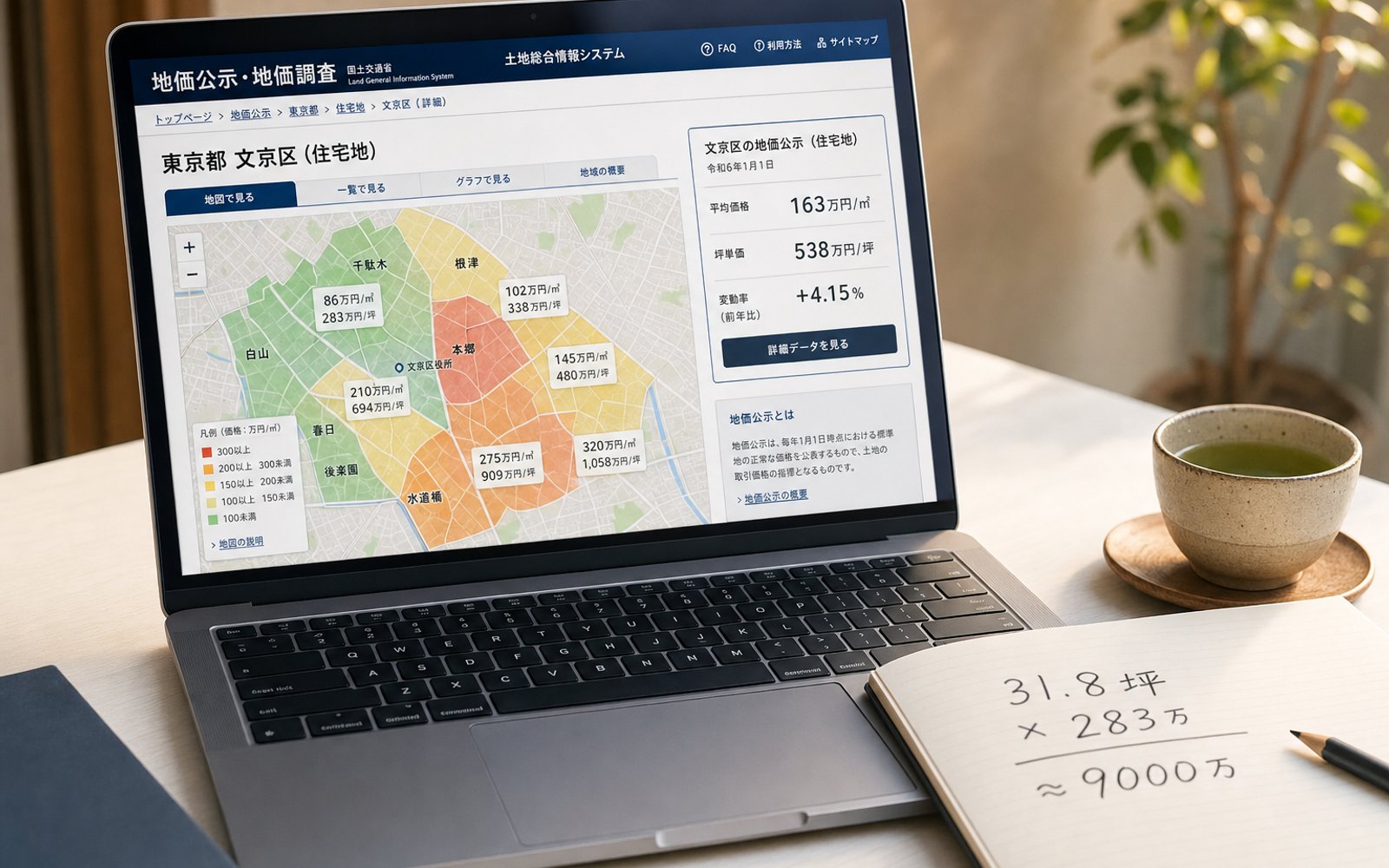
Hi Akiya Hunters!
When I first started searching for my forever home in Japan, one of my biggest worries was figuring out “fair market value” so I wouldn’t get ripped off.
I lived for many years in the UK and the US, where I was used to real estate markets where you can instantly look up historical sales data and see exactly how a property’s value has trended over time. In Japan, that transparency isn’t quite as obvious at first glance — and that uncertainty is exactly where overpaying happens.
The Secret Weapon: Official Land Registries
During my research, I found an incredibly useful shortcut: using official Japanese land registries to check average land values (公示地価, kōji chika). Once you have the average price per square meter — or per tsubo — for a specific neighborhood, you can multiply it by your plot’s size to get a baseline value.
What is a tsubo? A traditional Japanese unit of area. 1 tsubo ≈ 3.3 square meters.
This single trick turns an opaque, intimidating market into something you can actually do arithmetic on. It won’t tell you the exact price a house will sell for — but it gives you a defensible number to anchor every negotiation to.
Real-World Example: My Akiya in Setagaya
To show you how the math works, here’s the breakdown for my akiya (abandoned/vacant house) project:
- Location: Komazawa, Setagaya-ku, Tokyo
- Average land price: ~283 man yen per tsubo (approx. 86 man yen per m²)
- My plot size: 31.8 tsubo
- Baseline land value: 31.8 tsubo × ¥2,830,000 ≈ 9,000 man yen (¥90,000,000)
(Note: “man” means 10,000, so 9,000 man is 90 million yen.)
Get the akiya cost breakdown we won't publish publicly
Join for renovation numbers, contractor lessons, sourcing notes, and behind-the-scenes updates from our Tokyo akiya.
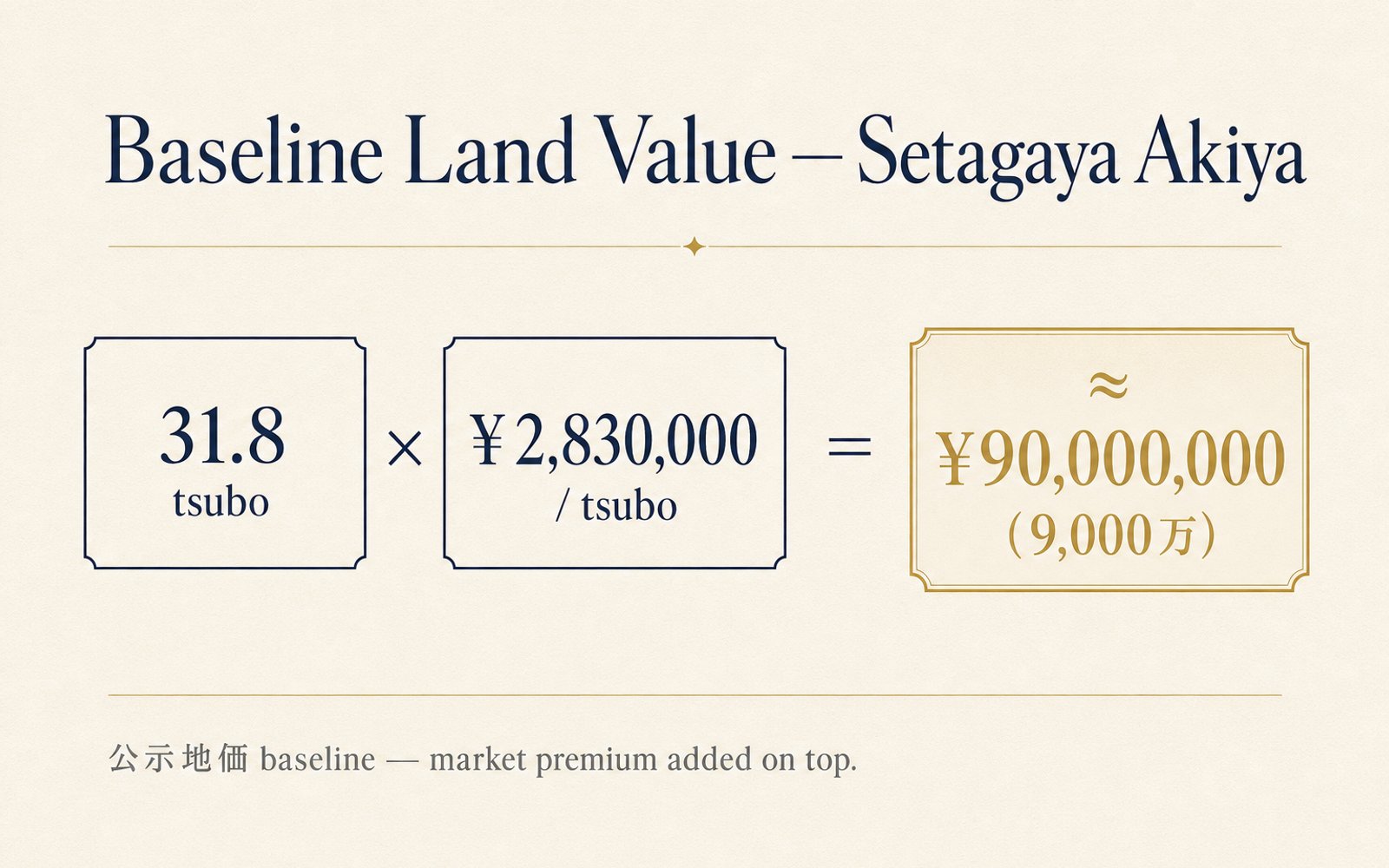
That baseline number — built from a published rate and a plot size anyone can measure — instantly reframed every listing I looked at afterward. Instead of staring at a big scary asking price, I could see how far above the land floor a seller was reaching.
The Catch: Government Value vs. Real Market Price
While this baseline math is a fantastic starting point, be aware that real-world market listings are usually much higher than government registry values. When a property actually hits the market, a “real-world premium” gets tacked on.
Think of the registry value as your floor — the actual price you pay depends heavily on the area’s popularity. The hotter the neighborhood, the higher the premium. Use the registry to judge whether a seller’s premium is reasonable or completely outrageous.
For a sought-after Tokyo ward like Setagaya, a premium over the published land value is normal. The point isn’t to expect to pay the floor — it’s to know the floor so you can tell the difference between a fair premium and a fantasy one.
Useful Links to Get Started
If you want to look up land costs for your favorite neighborhoods, these two resources are where I’d start:
- Tochidai.info — a fantastic, easy-to-use database where you can look up localized land data (use your browser to translate it easily).
- MLIT Land Price Information System — the official database provided by Japan’s Ministry of Land, Infrastructure, Transport and Tourism.
One final tip: while you can absolutely ask AI for these numbers nowadays, AI can sometimes miscalculate conversion rates or pull outdated data. I highly recommend double- or triple-checking against the sources above before making any big decisions.
If you want to see how this baseline land value fed into our actual total spend — purchase plus every renovation line item — I’ve published the full cost breakdown from our restoration.
Happy house hunting!
Want to walk a real restored akiya in Setagaya before you start running the numbers yourself? Book a tour and see what the math actually buys.
Related reading: How much does an akiya really cost? · How to find an akiya in Japan · Can foreigners buy an akiya in Japan?
Curious about the journey behind the numbers? Join our newsletter for restoration stories and practical akiya guides.
Get the akiya cost breakdown we won't publish publicly
Join for renovation numbers, contractor lessons, sourcing notes, and behind-the-scenes updates from our Tokyo akiya.
Want the real akiya numbers, not just the pretty photos?
Subscribe for renovation cost breakdowns, contractor lessons, antique finds, and the next story before casual visitors see it.
No spam. Just the strongest restoration stories, real costs, and occasional tour news.